Devotion Is Not Due Diligence: What Isis's Mystery Cult Reveals About Narrative Worship in Crypto
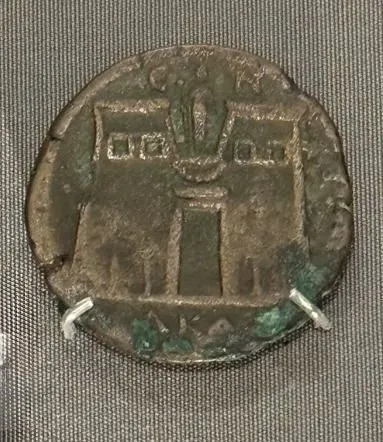
Photo: SpeakingArch, CC BY-SA 4.0, via Wikimedia Commons
The Oldest Playbook in History
Long before whitepapers and Discord servers, the Egyptian goddess Isis commanded one of the ancient world's most devoted followings. Her mystery cult, which spread from the Nile to the far corners of the Roman Empire, offered initiates two irresistible promises: personal rebirth and access to hidden knowledge reserved for the faithful. Membership required not merely belief, but public ritual, financial offerings, and the surrender of private doubt.
Strip away the papyrus and incense, and the structure looks uncomfortably familiar. Today's most devoted crypto communities promise transformation — financial rebirth through early adoption — and trade in secret knowledge: alpha groups, insider signals, tokenomics only the initiated truly understand. For US investors trained to think of themselves as rational market participants, recognizing this pattern is not an academic exercise. It is a portfolio defense mechanism.
Why Narratives Outperform Fundamentals — Emotionally
Markets are supposed to price assets on fundamentals. In practice, they price stories, and stories travel faster than spreadsheets. A narrative does something a balance sheet cannot: it gives the investor an identity. You are not merely holding a token; you are a believer, an early adopter, a member of a movement that the uninitiated — the 'normies,' the skeptics, the regulators — simply fail to understand.
The cult of Isis understood this. Initiation was not a transaction; it was a transformation. Modern token communities replicate the arc with remarkable fidelity. There is a creation myth (the anonymous founder, the rejected VC term sheet, the genesis block). There is liturgy (the daily price check, the recurring memes, the shared vocabulary). There is heresy (selling, or worse, publicly questioning the roadmap). And there is the promise of resurrection — the bear market as tomb, the next bull run as rebirth.
Psychologists call this identity-protective cognition. Once an investment becomes part of who you are, disconfirming evidence feels like a personal attack, and the mind works overtime to explain it away. The ancient initiate who doubted the mysteries could simply leave. The modern holder who doubts the protocol often stays — because leaving means admitting the identity was a mistake.
The Three Tests That Separate Conviction from Cult
None of this means conviction is a vice. Some of history's best investment theses were held against years of mockery. The question is not whether you believe, but what your belief costs you to maintain. Three tests help draw the line.
The falsification test. Ask yourself: what evidence would change my mind? A genuine conviction has an answer. 'If transaction volume collapses for six consecutive months, I exit.' A cult loyalty has none. Every bearish data point is reinterpreted as proof of the conspiracy against you. If you cannot articulate the conditions under which you would sell, you do not hold a thesis — you hold a faith.
The open-book test. Isis's cult guarded secrets; that secrecy was central to its power. Healthy projects behave in the opposite way. Code is public, treasuries are auditable, team identities are known, and criticism is engaged rather than banned. When a community's answer to hard questions is 'do your own research' followed by the excommunication of anyone who actually does, the knowledge is not secret because it is valuable. It is secret because scrutiny is dangerous to it.
The offering test. Ancient devotees paid tithes and made pilgrimages. Modern equivalents include ever-escalating commitments: buy the dip, stake the tokens, move assets onto the protocol's own bridges, recruit friends. Ask whether each new demand increases your exposure to the project's specific failure modes. Ritual sacrifice that concentrates your risk is not participation. It is extraction wearing the costume of belonging.
Rebirth as a Business Model
The promise of rebirth deserves special scrutiny, because it is the load-bearing pillar of both mystery religion and crypto marketing. Every cycle, a fresh cohort of American investors is told that the last cycle was the rehearsal and this one is the real thing — that the faithful who held through the tomb of the bear market will be rewarded with resurrection.
Sometimes that is true. Assets do recover, and patience has occasionally been rewarded. But the promise of rebirth is also the perfect mechanism for deferring accountability. A project that can always claim the next cycle as its redemption arc never has to justify the present one. When the roadmap slips, the answer is the halving. When the token bleeds, the answer is the macro environment. The tomb is always temporary, and the resurrection is always one more offering away.
The discipline is to ask what, specifically, would have to change for the promised rebirth to occur — and whether the team controls any of those variables. If the answer is nothing and no, you are not investing in a recovery. You are funding a procession.
Belonging Without Worship
The final lesson from the cult of Isis is not that devotion is foolish. It is that devotion was designed — deliberately, carefully, and effectively — to bind people to an institution that benefited from their commitment. The same design skill exists in crypto marketing departments today, and it is aimed directly at the same psychological levers.
You can keep the community and lose the worship. Join the forums, learn the technology, enjoy the camaraderie of people exploring a strange new asset class. But keep your capital decisions in a separate room, governed by written criteria you set when you were calm. The ancients built their mysteries to outlast doubt. Your portfolio should be built to survive it — because in markets, as in history, the movements that demand your faith are rarely the ones that protect your wealth.