The Toll Road Nobody Mentions: How Layered Crypto Fees Are Quietly Eroding Your Actual Returns
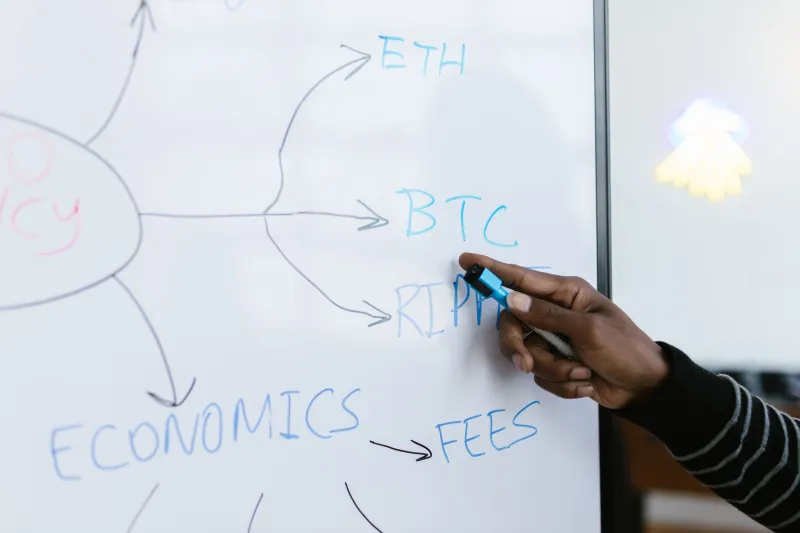
There is a persistent myth in retail crypto investing: that fees are a minor inconvenience, a rounding error on the path to significant returns. Experienced institutional desks know otherwise. The layered fee structures embedded across modern cryptocurrency platforms, staking protocols, and decentralized finance ecosystems function less like minor transaction costs and more like a toll road with multiple checkpoints—each one extracting a modest sum, but together representing a meaningful drain on compounding wealth.
For everyday American investors navigating this space, understanding the architecture of these costs is not merely academic. It is the difference between achieving the returns a strategy promises on paper and watching those returns quietly redistributed upward through a hierarchy that rewards scale and sophistication.
The First Layer: What Exchanges Are Not Telling You About Spread and Commission
The most visible fee is the trading commission—typically displayed as a percentage of transaction value. On major US-regulated exchanges, maker-taker models advertise rates that appear reasonable in isolation: often between 0.04% and 0.60% depending on volume tier. What those headline figures obscure is the bid-ask spread, an implicit cost that never appears on a fee schedule.
For liquid assets like Bitcoin or Ethereum, spreads on top-tier platforms may be negligible. But for mid-cap and small-cap tokens—precisely the assets many retail investors pursue in search of outsized returns—spreads can widen considerably, particularly during periods of volatility. A trader executing a $5,000 position in a lower-liquidity token may absorb a combined cost of 1% to 2% before accounting for any commission at all. Execute that trade a dozen times across a year, and the cumulative drag becomes structurally significant.
Institutional participants, by contrast, often negotiate custom fee arrangements or operate their own market-making infrastructure, effectively bypassing the spread disadvantage that retail participants absorb as a matter of course.
The Second Layer: Staking Protocol Fees and the Validator Cut
Proof-of-stake networks have made yield generation accessible to retail investors who previously had no mechanism to earn passive returns on digital assets. The appeal is genuine. However, the fee architecture surrounding staking deserves careful scrutiny.
When a US investor stakes through a centralized exchange or a liquid staking protocol, the stated annual percentage yield already reflects a fee deduction—but that deduction is rarely presented with full transparency. A network may distribute a gross staking reward of, for example, 6% annually. By the time a validator commission is applied, a protocol fee is subtracted, and the custodial platform takes its own cut, the investor may receive 3.5% to 4.5% net. That gap is not a minor administrative cost. Over a multi-year holding period, it represents a substantial transfer of value away from the capital provider.
Liquid staking derivatives introduce an additional dimension. Protocols like those operating on Ethereum's ecosystem charge ongoing management fees on staked balances. When investors then deploy those derivative tokens into DeFi yield strategies—a common practice among more active participants—they layer a third fee structure on top of the first two.
The Third Layer: DeFi's Hidden Cost Architecture
Decentralized finance promises disintermediation. In practice, it replaces traditional intermediaries with smart contract protocols that extract fees at every point of interaction. Liquidity pool providers earn a share of trading fees, but they also absorb impermanent loss—a form of value erosion that is not a fee in the traditional sense but functions as one in its economic effect.
Yield aggregators, which automatically route capital toward the highest-returning strategies, charge performance fees and management fees that are deducted before returns reach the investor. Gas costs on congested networks add another variable layer, one that scales unpredictably with network demand rather than with the size of the transaction. A retail investor deploying $2,000 into a yield strategy during a period of elevated network activity may pay gas fees that represent 3% to 5% of the deployed capital as a one-time entry cost alone.
The compounding effect of these overlapping costs is rarely modeled in the promotional materials surrounding DeFi platforms. Advertised APYs reflect gross protocol yields, not the net figure an investor with a modest position will actually receive after every layer has taken its share.
Ancient Hierarchies, Modern Extraction
The structural parallel to historical resource extraction systems is not accidental. In ancient Egypt, agricultural surplus flowed upward through a tiered administrative hierarchy—from cultivator, to local official, to regional administrator, to the central treasury—with each layer retaining a portion before passing the remainder upward. The cultivator at the base of the system worked the land but captured only a fraction of its output.
Modern crypto fee hierarchies operate on a similar principle, though the extraction is automated and obscured by technical complexity rather than administrative authority. The retail investor at the base of the system provides the capital and absorbs the risk, while protocol treasuries, validator networks, exchange operators, and liquidity providers each retain a portion of the yield that capital generates. The investor who does not understand this architecture will consistently underperform the theoretical return their strategy should deliver.
Calculating Your True Cost Basis
The practical response to layered fee structures begins with honest accounting. US investors should develop the habit of calculating total cost of participation for any strategy before committing capital. This means identifying every fee layer: exchange commission, spread estimate, staking protocol fee, validator commission, gas costs for entry and exit, and any performance fees charged by yield aggregators.
For staking strategies, compare the net APY across multiple platforms rather than accepting the first advertised figure. For DeFi participation, factor gas costs into minimum viable position sizes—a strategy that requires frequent rebalancing may be economically viable for a $50,000 position but structurally unprofitable for a $3,000 one.
Portfolio consolidation is another practical lever. Every unnecessary transaction generates a fee event. Investors who trade reactively—responding to short-term price movements with frequent position adjustments—accumulate fee costs that compound against them over time. Institutional desks minimize transaction frequency by design. Retail investors often do the opposite.
The Competitive Advantage of Fee Awareness
There is genuine opportunity embedded in this analysis. Investors who understand fee architecture can make more precise comparisons between platforms, identify strategies where net yields are genuinely competitive, and avoid deploying capital into structures where the fee extraction is disproportionate to the service delivered.
Fee-conscious investing is not a defensive posture. It is a form of edge. In a market where gross returns across similar asset classes tend to converge over time, the investor who consistently captures a larger share of those gross returns through disciplined cost management will outperform peers who ignore this dimension entirely.
The toll road exists. The question is whether you are driving it knowingly or simply paying every toll without ever reviewing the receipt.