Intelligence Over Impulse: Building a Personal Crypto Market Monitoring System That Actually Works
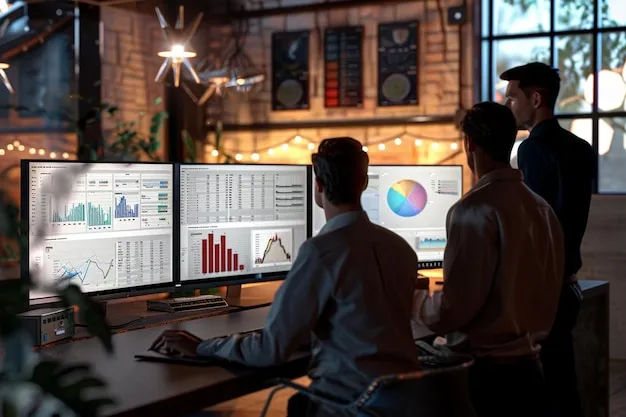
Photo: analyst reviewing multiple data screens dashboard monitoring system, via img.freepik.com
The Central Intelligence Agency does not allow its analysts to scroll Twitter for an hour and then brief the President. Every piece of information that enters the intelligence pipeline is sourced, evaluated for reliability, cross-referenced against existing knowledge, and assigned a confidence level before it influences any decision. The process is deliberate, structured, and — critically — designed to filter out the noise that would otherwise overwhelm the signal.
The average American cryptocurrency investor, by contrast, operates in a state of perpetual informational chaos. Telegram groups, Reddit threads, YouTube predictions, and influencer posts collide in a feed that rewards urgency over accuracy. The result is not better decisions — it is faster, more expensive mistakes.
The solution is not to consume more information. It is to build a system.
Why Most Crypto Information Habits Fail
Before constructing an effective monitoring framework, it is worth diagnosing why the default approach breaks down. Three patterns account for the majority of information-driven trading errors.
Recency bias amplified by algorithm. Social media platforms are engineered to surface content that generates engagement — which, in financial markets, means content that provokes strong emotional responses. Fear and euphoria travel faster than measured analysis. An investor who relies primarily on social feeds will systematically receive information that is emotionally charged and temporally compressed, making every market movement feel more significant than it is.
Source conflation. Not all information is created equal, but most retail investors treat a Bloomberg terminal alert and an anonymous Reddit post as roughly equivalent inputs. Without a deliberate framework for evaluating source credibility, the loudest voice in the room tends to carry the most weight — regardless of its track record.
Reactive rather than anticipatory posture. The majority of retail investors respond to market events after they have already occurred. A disciplined intelligence system, by contrast, identifies leading indicators and monitors them proactively — enabling decisions that are made ahead of the crowd rather than in reaction to it.
Step One: Define Your Collection Requirements
Professional intelligence analysts begin every project by articulating what they need to know — not what is available to know. This distinction matters enormously.
Before building any monitoring infrastructure, write down the specific questions your investment decisions depend on. These might include:
- What is the current regulatory posture of US federal agencies toward digital assets?
- Are institutional flows into spot Bitcoin ETFs accelerating or decelerating?
- What is the trend in on-chain transaction volume for assets I hold?
- Are there credible technical signals suggesting a shift in the prevailing market trend?
This list becomes your collection requirement — the filter through which all incoming information is evaluated. If a piece of content does not address one of your defined questions, it does not belong in your monitoring system.
Step Two: Establish a Tiered Source Hierarchy
Once you know what you are looking for, build a structured source list organized by reliability tier.
Tier One — Primary Sources: On-chain data platforms (Glassnode, Nansen, Dune Analytics), official regulatory filings (SEC, CFTC, FinCEN), and exchange-reported volume and order book data. These sources provide raw, verifiable information with minimal interpretive distortion.
Tier Two — Analytical Sources: Reputable research desks (Messari, Kaiko, CoinMetrics), financial journalism with documented editorial standards, and academic or institutional papers on digital asset markets. These sources apply interpretation to primary data, which adds value but also introduces perspective.
Tier Three — Commentary Sources: Podcasts, newsletters, and analyst commentary. Useful for generating hypotheses and identifying emerging narratives, but should never be treated as confirmatory. Treat this tier as a prompt for further research, not a conclusion.
Tier Four — Unverified Sources: Social media, anonymous forums, and influencer content. This tier is not without value — retail sentiment is itself a market signal — but it must be consumed with explicit skepticism and never used as a primary basis for decisions.
Step Three: Build Your Monitoring Dashboard
A personal monitoring dashboard consolidates your Tier One and Tier Two sources into a single, reviewable interface. The goal is to replace reactive scrolling with scheduled, structured review.
Several free and low-cost tools support this architecture:
RSS aggregators such as Feedly or Inoreader allow you to subscribe to specific publication feeds and review them in a single interface without visiting each site individually. This eliminates the algorithmic distortion of social media while preserving access to quality journalism.
Custom alert systems via Google Alerts or dedicated platforms like Messari's notification features can flag specific keywords — regulatory agency names, specific asset tickers, macroeconomic indicators — so that relevant developments surface proactively rather than waiting for you to seek them out.
Charting and on-chain dashboards such as TradingView for technical data and Dune Analytics for on-chain metrics should be bookmarked and reviewed on a defined schedule — not opened reactively in response to price movements.
The dashboard is not a live feed. It is a structured briefing that you consult at defined intervals.
Step Four: Develop a Decision Playbook
Intelligence without a decision framework produces analysis paralysis. The final component of a functional monitoring system is a pre-written playbook that translates specific signal conditions into specific actions.
This playbook should address scenarios you have already thought through carefully — not scenarios you are encountering for the first time under emotional pressure. Examples might include:
- If on-chain exchange inflows for BTC exceed X threshold over a 72-hour period, review position sizing against current risk parameters.
- If a major US regulatory enforcement action is announced, do not trade for 24 hours; allow the market to establish a new equilibrium before reassessing.
- If a Tier Four source generates widespread attention around a specific asset I do not hold, treat it as a contrarian signal and research the fundamentals before considering any action.
The playbook converts your monitoring system from an information-gathering exercise into an operational tool.
The Discipline of the Scheduled Review
The most technically sophisticated monitoring system is ineffective without the discipline to use it consistently and resist the temptation to supplement it with reactive information consumption.
Commit to a defined review schedule — morning and evening, or once daily, depending on your trading style — and treat that schedule as the exclusive window for consuming market information. Outside of those windows, close the feeds.
This is, admittedly, a demanding standard in a market that operates continuously. But the investors who consistently outperform their peers are not those who consume the most information — they are those who have learned to act only on the information that matters.